- Explore Research -
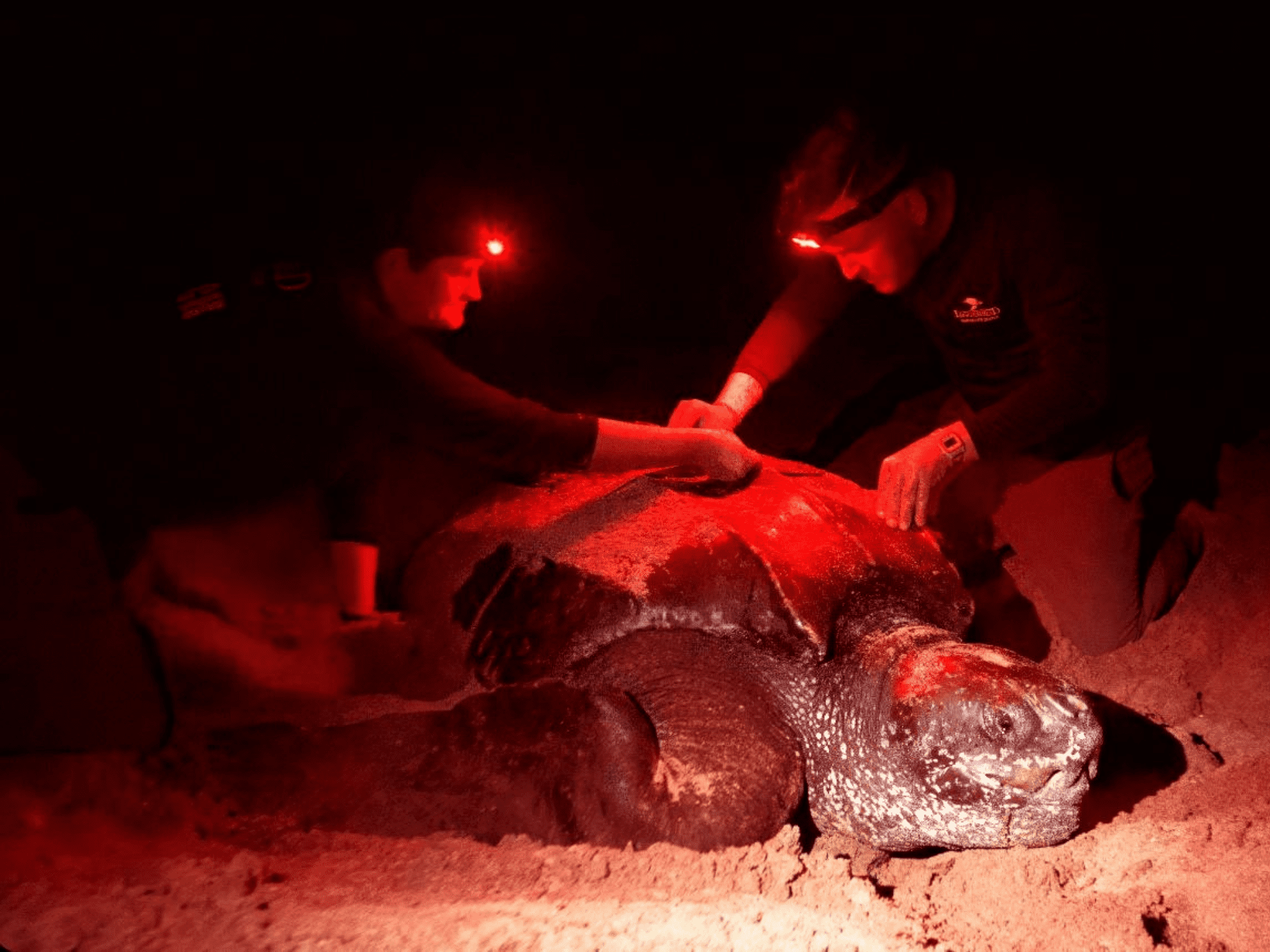 The research team at Loggerhead Marinelife Center (LMC) monitors a 8.5 mile stretch of beach from March - October in Juno Beach, Florida. LMC conducts specially-permitted nesting and behavior research under Marine Turtle Permits issued by the Florida Fish & Wildlife Conservation Commission.
LMC’s research department has one of the longest-running sea turtle monitoring programs in the state of Florida. The program officially began when LMC founder Eleanor Fletcher received her permit from the state of Florida in 1969. Each season, the research team documents all sea turtle activities from March - October along 8.5 miles of beach from the Jupiter Inlet Colony south to John D. MacArthur Beach State Park. This is one of the most densely nested beaches in the world, with peak years of more than 20,000 nests.
LMC research biologists advance sea turtle conservation through rigorous research on nesting, health, and behavior. Their research informs conservation decisions used to promote the recovery of sea turtle populations not only in Florida, but world-wide.
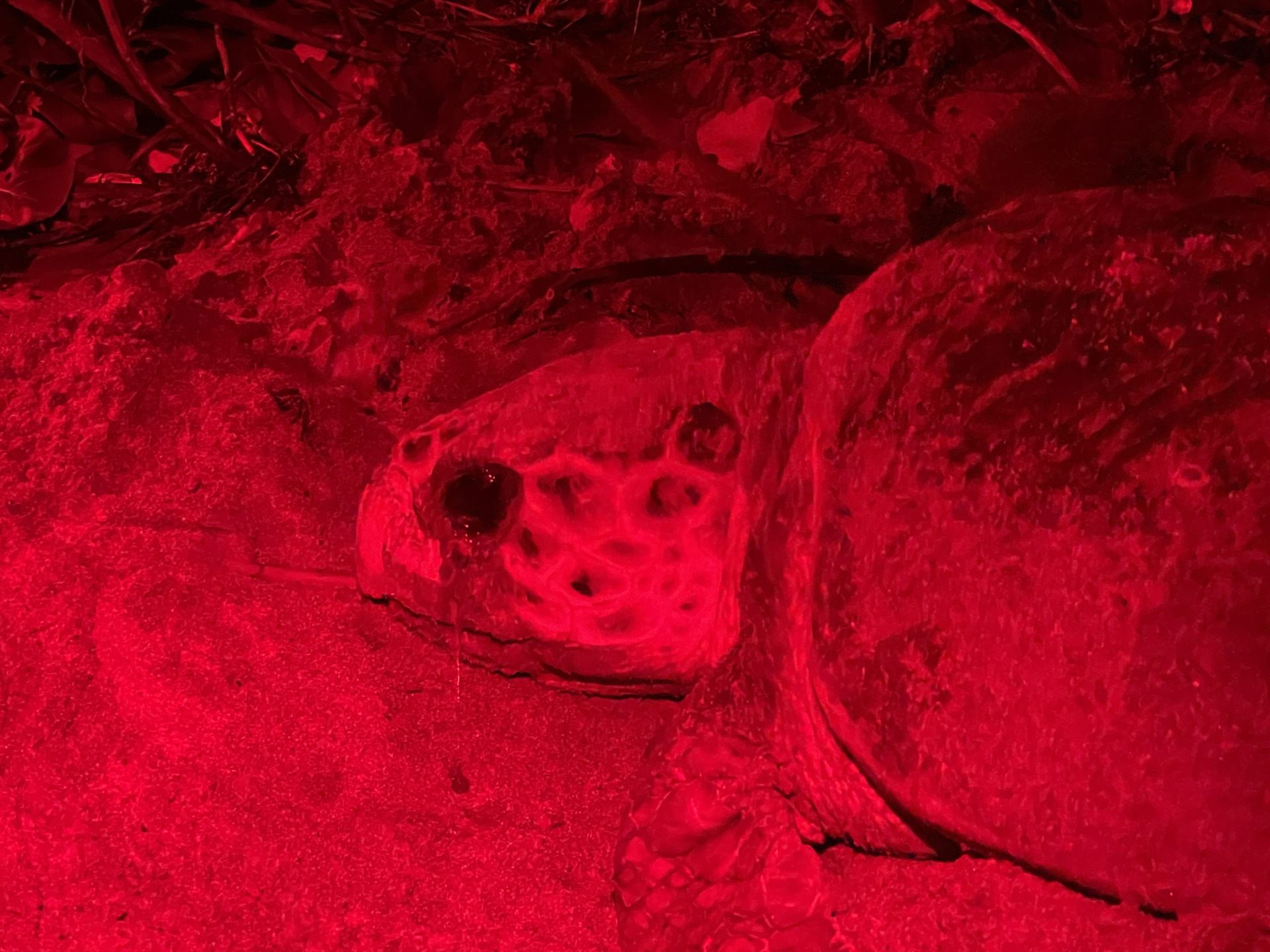
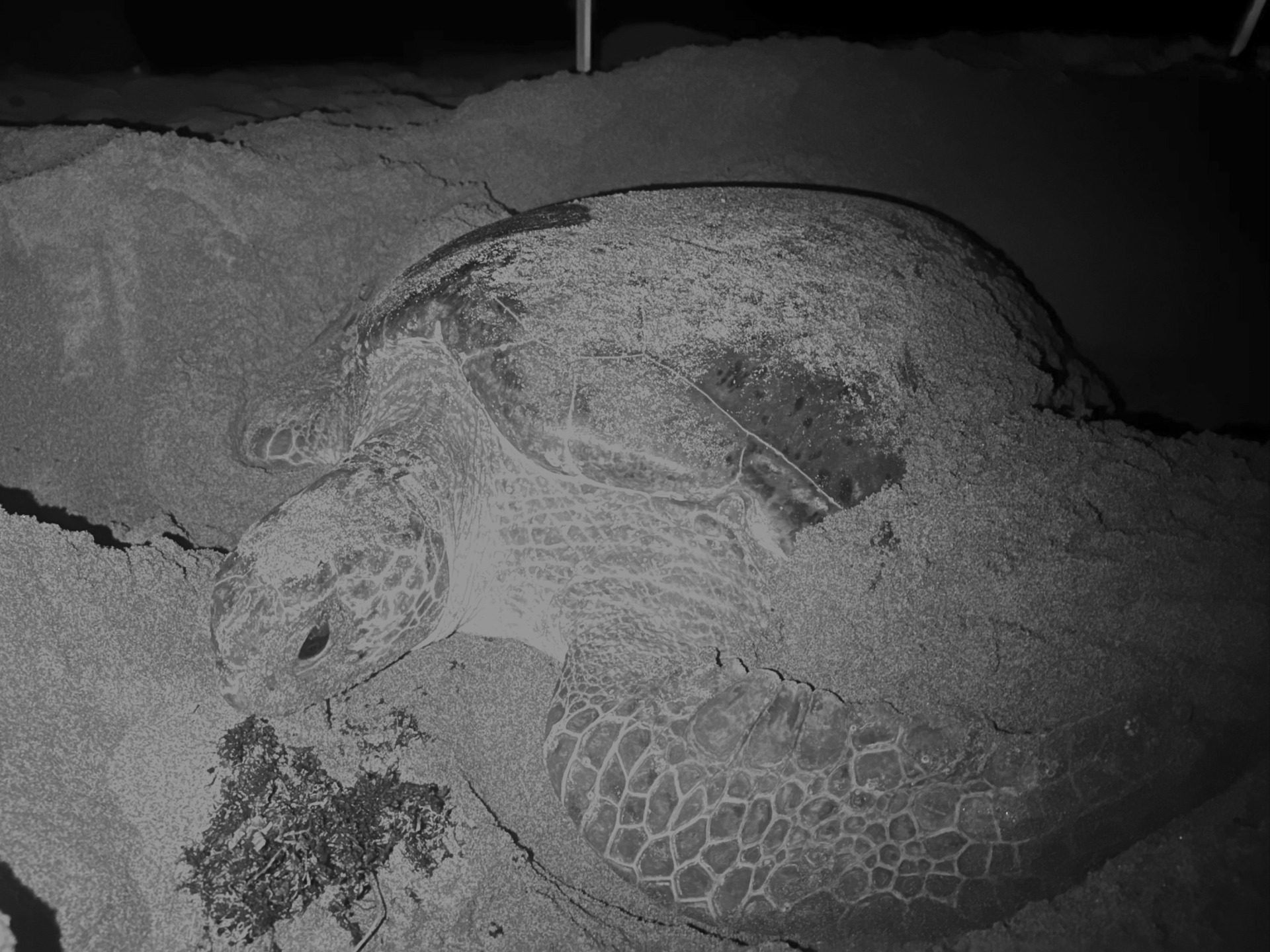
LMC studies leatherback, loggerhead, and green turtles during nesting season, which runs annually from March 1 to October 31. Each of the three species nest during different, often overlapping periods during the annual nesting season, with leatherbacks arriving to nest first, followed by loggerheads and then the green turtles. Of the three species, the leatherback is the least common. To learn more about these rare turtles, check the FAQ section below.

Research Collaboration
In recent years, LMC's Research Laboratory has formed numerous partnerships with individuals and agencies to conduct cutting-edge research on these endangered animals. Our current research projects include:
- Metabolomic/health analysis of nesting leatherbacks (collaboration with North Carolina State University and the University of Florida)
- Heavy metal analysis of blood and salt gland secretions of nesting leatherbacks (collaboration with Harbor Branch Oceanographic Institute-Florida Atlantic University and Michigan State University)
- Impacts of endocrine-disrupting chemical plasticizers on leatherback and loggerhead sea turtle health and reproductive success (collaboration with Harbor Branch Oceanographic Institute-Florida Atlantic University, University of Florida, University of Georgia, Georgia Sea Turtle Center, and Inwater Research Group)
- Examining heavy metal contamination and its impacts on leatherback chromosomal abnormalities (collaboration with University of Louisville's Wise Laboratory of Environmental and Genetic Toxicology)
- Examining global leatherback sea turtle nest temperatures (collaboration with Université Paris-Sud)
- Characterization of anthropogenic and natural injuries on nesting leatherback turtles (collaboration with with Harbor Branch Oceanographic Institute-Florida Atlantic University)
- Determining the best predictors of body condition in nesting leatherback turtles (collaboration with Upwell)
- Interpreting the pre-nesting foraging ecology of Florida’s nesting leatherbacks using multi-tissue stable isotope analysis (collaboration with Florida Atlantic University)
- Analysis of microplastics in leatherback sea turtle nests (collaboration with Turtle Island Restoration Network)"
Satellite Tracking
Thanks to the generosity of the Scott M. Panzer Foundation, you can see current and past research tracking turtles on our new tracking platform. Sea turtles on our monitored area of nesting beach and sea turtle rehabilitation patients can be candidates for satellite tags, depending on the research studies in progress. You will see both types of tracked turtles on the platform.